


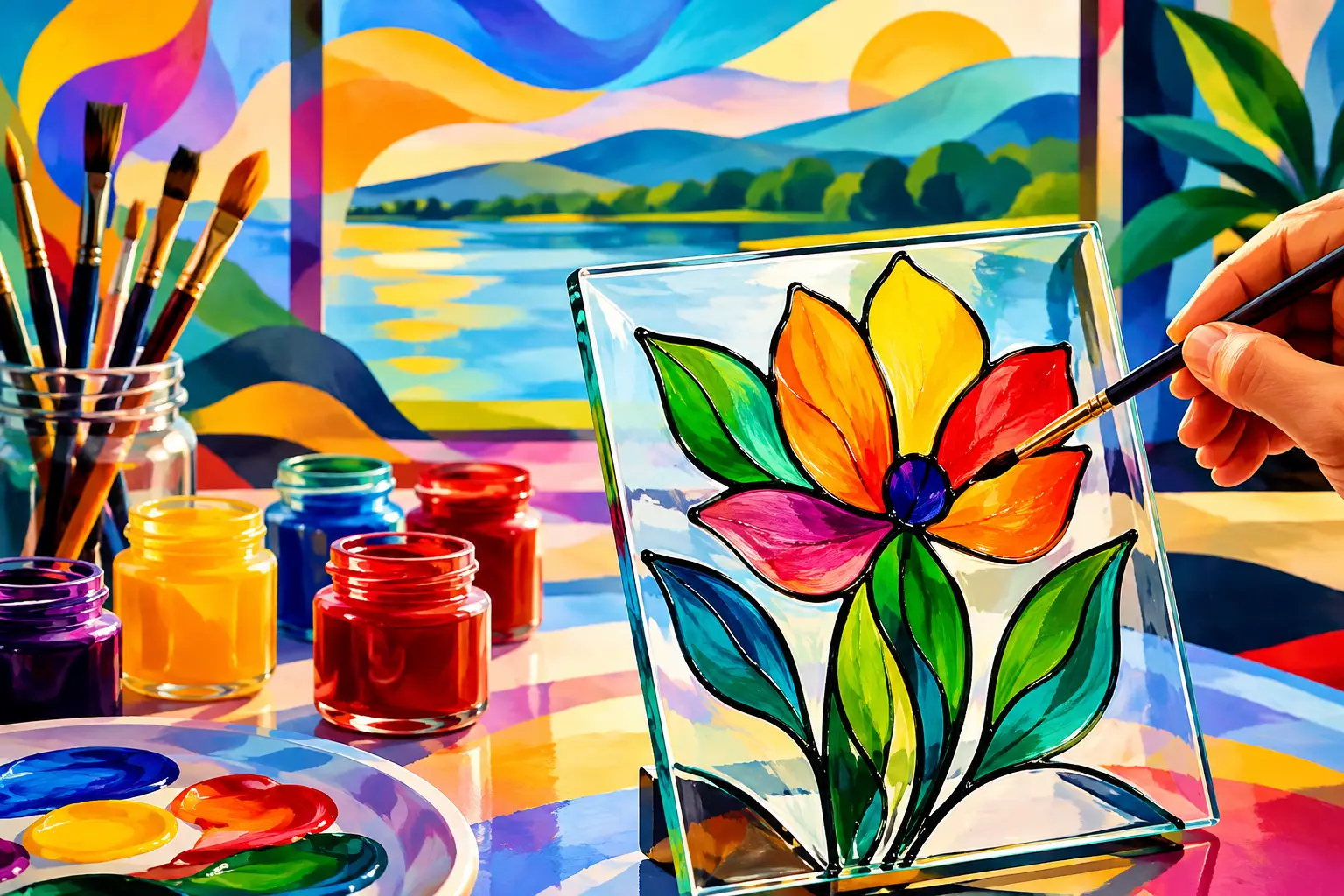
Glass Painting Workshop for Beginners Near Mt. Juliet
A glass painting workshop beginners can walk into with zero art experience and walk out of feeling proud is not about getting every line perfect. It is about choosing colors that make you happy, trying something new with people you love, and watching a simple glass piece become uniquely yours. Whether you are planning a girls' night, a creative date, a family outing, or a little time just for you, this is the kind of activity that makes an ordinary day feel special.
Why a Glass Painting Workshop for Beginners Feels So Good
Glass painting is wonderfully approachable because the surface does not ask you to start with a blank canvas and a big idea. Your project gives you a place to begin. You might work with a wine glass, a decorative glass piece, or another ready-to-paint item, then bring it to life with color, patterns, lettering, flowers, dots, or a design that feels like you.
There is also something calming about focusing on one brushstroke at a time. Your phone can stay tucked away. The everyday to-do list can wait. You get to slow down, laugh at the little paint mishaps, and enjoy making something with your own hands. Art does not have to be serious to be meaningful. Sometimes the best creative moments are the ones shared around a table with paint on your fingers and friends cheering each other on.
The best part for first-timers is that there is no need to arrive with a plan. A guided workshop gives you direction without taking away your freedom. You can follow an example closely, simplify it, or let your colors lead the way.
What to Expect at Your First Class
A beginner-friendly class should feel welcoming from the moment you sit down. You will usually receive the supplies and basic instruction you need for the featured project, along with encouragement throughout the process. At Mt. Juliet Hawaii Fluid Art, the goal is to make creativity feel fun and doable, not intimidating.
You will start with simple choices
Before painting begins, you will choose a color palette and think about the overall look you want. Maybe you love soft coastal blues, bright florals, bold neon colors, or a clean black-and-white design. You do not need a color theory lesson to make a beautiful piece. A good rule is to select two or three main colors, then add one accent color if you want extra pop.
If you are unsure, start with the colors you already wear, decorate with, or save on your inspiration boards. Those are often the shades that will make your finished glass feel most like home.
An instructor helps with the details
Painting on glass has its own rhythm. Paint may glide differently than it does on paper, and small details can take a little patience. That is exactly why instructor support matters. You can ask how much paint to load onto a brush, how to create smoother lines, or what to do if a dot turns into a blob.
The answer is often simpler than you expect: pause, clean up what you can, and keep going. A tiny imperfection can become part of a leaf, a swirl, a flower center, or a design detail nobody else would think to add. Handmade art is allowed to look handmade.
Choosing a Design You Will Actually Enjoy Painting
For your first project, choose a design with room to breathe. A few flowers, a repeating dot pattern, simple hearts, an abstract color layout, or a cheerful phrase can look fantastic on glass. Highly detailed portraits and tiny lettering can be fun later, but they may make a first session feel more stressful than relaxing.
Think about where your finished piece will live. A glass painted for your kitchen can use colors that match your favorite mugs or serving pieces. A gift might feature the recipient's favorite shade or a simple design tied to an occasion. For a group outing, friends can choose a shared theme while still making completely different pieces. One person may paint sunflowers while another goes full sparkle and polka dots. Both belong at the same table.
It also depends on the project and the paint being used. Some designs work best with bolder shapes, while others invite more detail. Your instructor can help you choose an idea that fits the surface, your available class time, and your comfort level.
How to Get Ready for Your Glass Painting Workshop
Wear something comfortable that lets you relax and move easily. Most studio paint is meant to be manageable, but creative activities can get a little messy, so it is smart to skip your favorite white shirt. If you have long hair, bringing a hair tie can help you stay focused on your project instead of brushing hair away from your face.
Arrive ready to experiment, not ready to perform. That mindset makes a bigger difference than any artistic skill. You do not need to compare your project to the person beside you, especially because everyone works at a different pace. Some guests finish a design quickly and add layers of detail. Others take their time selecting colors and building each section carefully. Both approaches are part of the experience.
If you are coming with a group, make a plan to enjoy the process together rather than race to the finish. Take photos, celebrate the unexpected color combinations, and ask each other what inspired your choices. The laughter often becomes just as memorable as the art you bring home.
A Creative Activity That Works for Real Life Celebrations
A glass painting workshop is easy to turn into an occasion. It gives a birthday gathering an activity everyone can enjoy, makes a bachelorette celebration feel more personal, and gives coworkers a way to connect beyond small talk. Unlike an outing where people only sit and watch, everyone gets to participate and leave with something tangible.
For parents, it can also be a refreshing option for a creative family day. Kids and adults do not need the same design to have fun together. The shared experience matters more than matching results. Just be sure to choose a class or project that suits the ages in your group.
For couples, glass painting offers a low-pressure date night where conversation comes naturally. You can paint side by side, trade color ideas, and enjoy the sweet surprise of seeing how differently each of you interprets the same project.
Your Finished Piece Deserves a Little Patience
Once you finish painting, follow the care guidance provided for your specific project. Depending on the materials and design, your piece may need time to dry or cure before it is ready for regular use. That waiting period is worth it. It helps protect the colors and lets your hard work last longer.
When you bring your piece home, display it where you will see it. Use it as a cheerful reminder that creativity does not require a special talent or a perfect result. It only requires a little curiosity and the willingness to begin.
Pick a project that sounds fun, invite someone who makes you laugh, and give yourself permission to paint without overthinking it. Your first glass piece may surprise you, and the time you spend making it may be the part you remember most.


Comments